

Recent Acapellies Projects
An overview of themes and inspirations:
Gratitude
Developed as a post-lockdown catalyst for communal recovery, Performed at venues such as St. Lawrence’s, the project featured a synthesis of vocalists and professional dancers to physicalise the music.
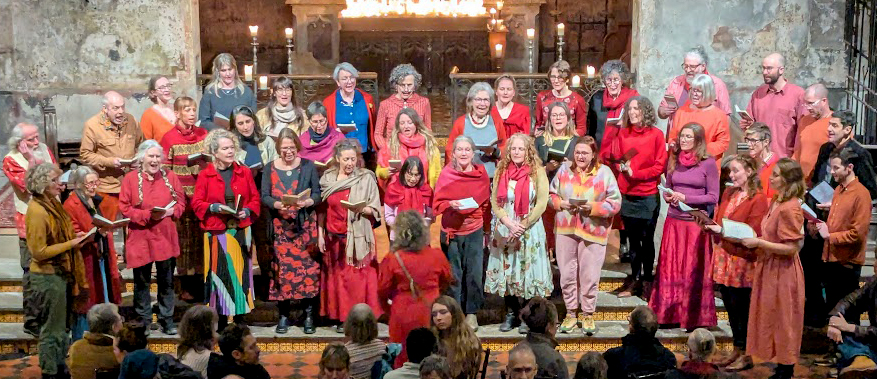
Fortitude , following on from the Gratitude Project, focused on empowerment and collective strength. Key repertoire included the resonant and strengthening pieces such as “You don’t have to Know the Way” and “Panther”.
Sanctuary
This project marked our formal transition into viewing choral performance as a healing act. The focus was the creation of a safe space where the choir became ‘brave’ in their delivery, consciously holding the audience within the soundscape to provide a sense of profound security and peace.
Archaea
Commissioned by the University of Bristol as a public outreach component for a science project on the origins of life, this piece served as the auditory counterpart to a massive Tree of Life embroidered painting that depicted “species all around and fossils down below.” The musical structure consisted of five songs, beginning with a Gaia mantra inspired by mystic Satish Kumar, which we evolved into a ‘first deity mantra’ or origins-of-life chant. The project concluded with a complex, original shape-note composition.
Inconsolable
was a strategic response to collective bereavement. Designed as a “sad show,” it utilized the weight of communal song to navigate the difficult terrain of personal and shared grief, providing a cathartic outlet for both the choir and the audience.
Resonance
Performed “for the church,” Resonance explored the traditional themes of the “Passion” and “Crucifixion.” Despite a spiritual-not-religious stance, we approached these Easter themes “whole-heartedly,” incorporating an Italian song and diverse cultural influences to explore the human experience of the passion from multiple global perspectives.
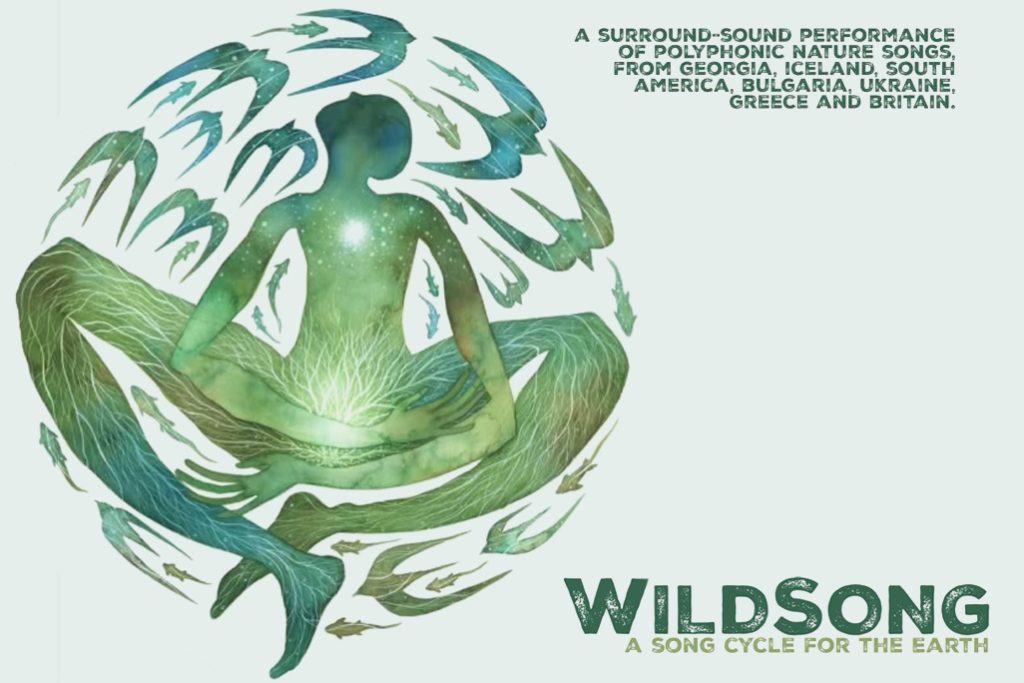
Wild Song
Commissioned by the Stroud Arts Festival under the theme of “nature, water, and life,” Wild Song featured highly specialized foraged content. A highlight was the performance of the oldest known Icelandic saga melody, a “saga time” piece where the original lyrics and tune remain intact—a rarity in a field where such links are often dispersed over centuries. It also featured Latvian village songs sourced from specific village songbooks.
Charitable organizations supported include:
• Palestinian and Ukrainian relief organisations
• GARAS (Gloucestershire Action for Refugees and Asylum Seekers)
• The Choir with No Name
• The Long Table